
This part of the ADA preparation focuses on the theory of training content and the procedures of teaching.
1. Definitions
- Didactics: Theory of training content, its selection and its significance for the trainee (science of teaching and learning).
- Core questions: What is the training for? What are the contents?
- Methodology: Science of teaching, instructing and briefing procedures.
- Core questions: How is training conducted? With what is training conducted?
2. Learning Areas
One distinguishes three essential learning areas:
- Cognitive Area (Knowledge): Mental abilities, factual knowledge.
- Psychomotor Area (Skills): Physical, manual activities (“Hand”).
- Affective Area (Attitudes): Emotional level, values and behavior (“Heart”).
3. Learning Objectives
Learning objectives describe the desired final behavior after a learning process.
Hierarchy
- General Learning Objectives (Richtlernziele): General educational goals (legal level).
- Rough Learning Objectives (Groblernziele): Clarification of general learning objectives for specific subject areas.
- Fine Learning Objectives (Feinlernziele): Unambiguous description of knowledge and skills.
Taxonomy Levels (Cognitive)
- Reproduction: Reproducing knowledge.
- Reorganization: Rearranging/explaining material.
- Transfer: Applying what has been learned to other tasks.
- Problem Solving/Creativity: Developing new things, evaluating.
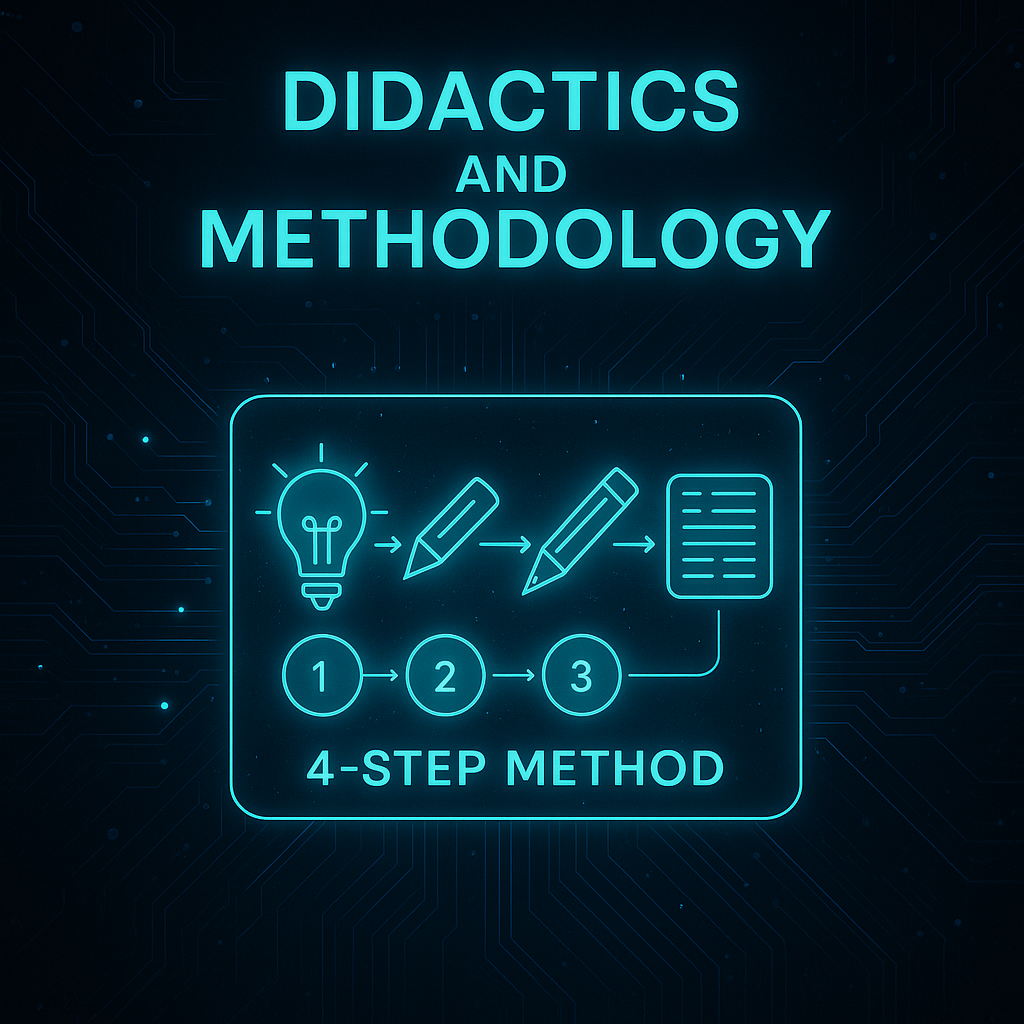
4. The Four-Step Method
A classic of operational instruction:
- Prepare: Prepare the workplace, material and the trainee (motivation).
- Demonstrate: The trainer demonstrates and explains the steps (What - How - Why).
- Imitate: The trainee carries out the work himself and explains his procedure. Mistakes are corrected immediately.
- Practice: The trainee continues to work alone. The trainer checks the result and is available for questions.
5. Pedagogical Principles
The following basic rules should be observed during instruction:
- From easy to difficult.
- From simple to complicated.
- From known to unknown.
- From concrete to abstract.
- Promote clarity and self-activity.